Thursday, 12 May 2016

Tips for CPA Exam Prep

Prepping for the CPA Exam

Certified Public Accountant and consultant Lewis Daidone offers tips for preparing for the CPA exam

Passing the Uniform Certified Public Accountant (CPA) examination is no easy feat. About half of all people who take the CPA exam fail. In addition, it is estimated that there is only about a 20% chance of passing all four parts in one try, so proper exam preparation is crucial.

Clearly, anyone who intends to take the CPA exam has to take it extremely seriously. Not only is the exam rigorous (it's a 14 hour test), the cost for the four sections of the exam is approximately $1,000, including the application fee. In addition, I highly recommend taking a review course – and those fees range from $1,500 to $3,000. Trust me—you don't want to have to take this more than you have to!

Here are a few tips to consider regarding taking the CPA exam.

Choose your study courses carefully

Don't settle for basic review courses or those with the best advertising or those that appear affordable. Do the research. Look for hard data on student exam passing rates. Review the reviews – search for student posts on independent websites..

Study like it's your full-time job

Plan to put in 30+ hours per week of study (approximately 500 hours) for each section of the exam. In addition to dedicated study time, you can also take audio courses, and listen to them during your drive to work or on the elliptical. You will also want to simulate the exam itself – multiple times. Your review courses should offer computerized test simulations; there are also online resources you should research – some are free, These should be used only to augment the review course material, not replace it.

Take care of yourself!

If you're completely sleep deprived and run-down by the time your exam date rolls around, you're probably going to kiss all of that exhaustive prep work goodbye. Get plenty of rest, eat well, and practice your favorite stress-reduction techniques so that you will be in top physical and mental condition for your big day!

Failed the CPA Exam? Don't Panic!

Failed the CPA Exam? Don't Panic—Try Again!

Lewis Daidone discusses options for CPA candidates who've failed one or more parts of the CPA Exam. Lewis Daidone is a Certified Public Accountant and consultant to financial services firms and technology companies.

Taking the Uniform Certified Public Accountant Examination is a crucial step on the road to becoming a successful and respected accountant. However, it is a road paved with challenges. The examination is an exhaustive, 14 hour, four-part test that requires years of dedicated preparation. Approximately half of all applicants fail. Credit for any section passed is valid for 18 months from the date the exam was taken. Examination credit expires by section.

If you've failed one or more parts of the CPA Exam, don't despair! You can take the CPA Exam as many times as your schedule (and your sanity) allows.

Failing with a score of 70 – 74

If you failed one of your sections by only a few points, apply for a Notice to Schedule (NTS) to reschedule the failed section as early in the next window as practicable, and begin seriously reviewing the previous materials. You've demonstrated that you've got a strong grasp of critical concepts within that section, and you just need to pay a bit more attention to some of the nuances. You already have the exam fresh in your mind, so you're definitely in a great position to do well on the retake.

Failing with a score of 70 or lower

Those who've failed one of the exams with a score under 70 probably aren't comfortable enough with the material to retake the test successfully early in the next testing window. If you are secure in your grasp of the materials for the next part that you are studying for, continue on your current track, take that exam, and then return to the section you failed. Schedule your re-examination late enough in the following window to give yourself enough time to really nail down all of the materials.

Remember, you have 18 months to pass all four sections of the CPA exam, so use them wisely. Don't let your stumble intimidate or discourage you; stay the course and conquer that test!

Friday, 1 April 2016

Careers for Accounting Majors: They're a Lot More Diverse Than You Think Pt. 4

Auditors


For some, the role of an auditor conjures up thoughts of boring, tedious and repetitive tasks that provide little job satisfaction or excitement. Why on earth would anyone want to become an auditor?

Quite a few reasons, actually!

Although an auditor may be considered a harbinger of doom in certain circumstances (think IRS), auditing jobs can be extremely fulfilling, particularly for those who enjoy problem-solving and logic puzzles. Auditors are similar to forensic accountants, except they don't typically work with law enforcement.

Roles/Responsibilities


Auditors scrutinize every facet of an organization's financial processes and look for inefficient controls, financial leakage, lack of regulatory compliance, deficient management policies, tax discrepancies, and other situations that may result in errors and/or inconsistencies; in some cases they may even uncover fraud. An auditor will comb through financial data and records to ensure that controls are operated as designed and that proper protocols are followed in accordance with policies and procedures.

Internal Auditors: Internal auditors work within an organization. These professionals investigate and monitor existing practices and help to determine risk management protocols. An internal auditor must follow the auditing process in an independent and objective manner, in many cases internal auditing departments will have a reporting line directly to the Board of Directors to ensure their independence.

External Auditors: External auditors work for independent accounting firms and, therefore, are not employees of the firms that they audit— hence, they are completely independent. Independent Accounting Firms work for the entity that that engaged them to perform the audit, such as the Board of Directors, the parent company, or even the government. In the case of a public company (one that is listed on a public stock exchange), the Board hires an independent accounting firm to determine if the Financial Statements prepared by management present a fair and accurate picture of the company and comply with generally accepted accounting principles.

Whether you want to be an internal or external auditor depends upon the type of environment most appeals to you. Internal auditors are a part of an organization, and therefore integral to that company's culture. External auditors are independent of the organization they audit which may allow for more directness in their audit approach.

Education


Auditors must have a Bachelor's degree, usually in accounting, business administration, or finance. Many organizations value auditors with a background in information technology or law, but having a solid grasp of your industry is essential. Many auditors, particularly external auditors, will study for and take the CPA exam in order to be credentialed as a Certified Public Accountant, which is essential for auditing public companies.

Salary


Nationally, the median salary for auditors is $53,000 per year; $61,000 if you have your CPA.

Lewis Daidone is a Certified Public Accountant and a consultant to financial services firms and technology companies..

Wednesday, 23 March 2016

Careers for Accounting Majors: They're a Lot More Diverse than You Think Pt. 3

In the previous post, I discussed environmental accountants. In this segment, I'll be exploring the law and order-centric world of the forensic accountant.

Forensic Accountant


In addition to being one of the fastest-growing law enforcement professions, forensic accountancy is one of the more inherently interesting and satisfying branches of accounting. If you enjoy solving puzzles and a good mystery novel (and if you're also proficient with numbers), financial forensics might be the career for you.

Some of the most famous criminal cases in the United States have hinged upon the work of forensic accountancy. The Lindbergh baby kidnapping was solved by Treasury Department agent Frank Wilson; he recorded serial numbers from the ransom money and distributed those numbers in a booklet, ultimately leading to the discovery of the cash and the kidnapper. This same numbers-cruncher also helped to get Al Capone prosecuted and convicted for tax evasion.

Roles/Responsibilities


Forensic accountants scrutinize financial, tax, and business records of individuals and organizations in order to uncover fraud or illegalities that may be pertinent to civil or criminal cases. Money laundering, tax evasion, and embezzlement all fall under the purview of the forensic accountant; occasionally, financially-motivated homicide prosecutions depend upon the work of the forensic accountant.

Education


The level of education necessary for the forensic accountant will depend upon the agency (local, state, or federal). At minimum, the candidate will require a Bachelor's degree in accounting as well as the appropriate public accounting certification. The ideal prospect will also have had extensive coursework in criminal investigation.

Because giving expert court testimony is an essential part of a forensic accountant's duties, all forensic accountants must receive specialized training that will prepare them for court appearances, as well as techniques in financial investigation, and knowledge of state and federal laws. The ability to issue clear and effective written communications is also critical.

Salary


Salaries for forensic accountants average $65,940 per year.

In the next installment, I'll be discussing auditing.

Lewis Daidone is a Certified Public Accountant and a consultant to financial services and technology companies.

Monday, 21 March 2016

Careers for Accounting Majors: They're a Lot More Diverse than You Think Pt. 2

It may come as a surprise that there are accounting jobs that suit nearly every personality type and area of interest. If you have a strong social and/or environmental consciousness, consider environmental accounting.

Environmental Accountants


The strong social and governmental focus on sustainable environmental practices has led to a plethora of local, state, and federal regulations. Additionally, public opinion demands that every business conduct its practice with an eye towards ecological responsibility. The environmental accountant must balance conserving company resources and eliminating waste with ensuring a positive environmental impact.


Roles/Responsibilities


The environmental accountant integrates conservation practices and principles into standard reporting, that includes cost/benefit analyses. He/She monitors all activity along the supply chain, including administrative and operational requirements (office supply usage, electricity, etc.). Environmental accountants must also have a keen understanding of the regulations that govern the environment in which the company operates, in particular those monitored by the Environmental Protection Agency, the federal oversight agency for all public and private business entities.

Since consumer interest regarding environmentally friendly practices is now at an all-time high, it is important to demonstrate a company’s commitment to maintaining a green work environment. So everything from green packaging and sustainable manufacturing to paperless offices come under the purview of the environmental accountant to ensure the most efficient and cost effective means of maintaining an ecologically responsible workplace.


Education


Environmental accountants must possess a Bachelor's degree; acquiring a Certified Professional Environmental Auditor's credential is essential for career growth and maximizing earning potential.

Salary


The mean salary varies depending upon location. In New York, the mean salary is $85,000—in Texas, it is $68,000. Texas, New York, and California employ the highest number of environmental accountants.

In my next post, I'll discuss forensic accounting.


Lewis Daidone is a Certified Public Accountant and a consultant to financial services firms and technology companies.

Tuesday, 8 March 2016

Careers for Accounting Majors: They're a Lot More Diverse than You Think Pt. 1


If you're looking for a fascinating career that is also in-demand, consider accounting.

According to the United States Department of Labor, accounting professionals—including budget analysts, forensic accountants, senior accountants, auditors, and controllers—are projected to be increasingly in demand well into the next decade. Accountants and auditors in particular may grow approximately 11 % faster than all other occupations on average. It is estimated that the increasing complexity of tax laws, the robust health of the economy, and enhanced regulations within the financial sector are all contributing factors to this accounting boom.

So, what's so diverse about different levels of accounting? If you've never considered a career in accounting, you might be somewhat confused as to what makes, for example, an auditor different from a controller. Don't they all deal with numbers?

They do, in a macro sense. However, there are a great many variations across industries and sectors. In this series of posts, I'll be discussing different accounting professions, what sort of personalities might find them appealing, and what kinds of specific projects the professionals can expect. First, I'll start with…

Budget Analyst


Also called a financial analyst, a budget analyst monitors and organizes the finances for his or her organization. This includes working across departments to determine budgetary needs, drafting proposals for funding, making financial projections, and drawing up budgets for any special projects. This can be either in the public or private sector, as well as in nearly any industry (health care, tech, arts and entertainment, travel, food and beverage, etc.) 

People who enjoy and excel at cross-functional collaboration would thrive as budget analysts.
In the public sector, budget analysts require a comprehensive understanding of legislative measures and regional demographics in order to effectively map out budgetary requirements and projections. People who are passionate about social issues and who would like to have a positive affect on the community are exceptionally suited to careers as public sector budget analysts. 

Salaries for local government budget analysts (with Master's degrees) begin at approximately $44,000. The average salary for federal government budget analysts is $71,220.

In the private sector, the possibilities are limitless. For example, a budget analyst working for a major network or film studio would not only perform organizational budget proposals, funding requests, and financial analysis, but also work closely with production teams for various projects. 

The average salary for budget analysts in the arts and entertainment industry is $92,370.

In my next post, I'll discuss environmental accountants!

Author Lewis Daidone is a Certified Public Accountant, and currently consulting with financial services and technology companies.

Monday, 22 February 2016

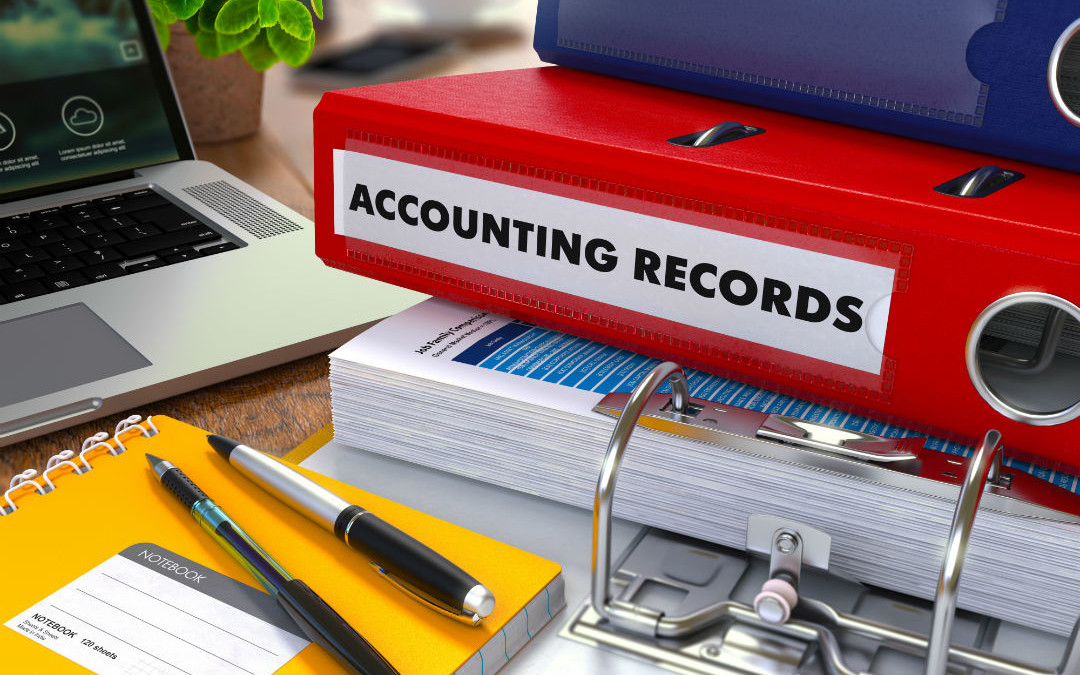
Keeping An Accurate Accounting Record

Image source: corportatehub.hk
It can be argued that accountancy can make or break a business. Governmental Agencies, mom and pop businesses and the most sophisticated financial organization realize the importance of keeping accurate accounting records. Not only to properly understand the economic state of their business, but also to help to make intelligent decisions regarding how to grow and where to deploy resources. Surprisingly, while this point of view is widely maintained, it lacks in its execution more than it should. Each Organization should design its own record-keeping system, but certain basics should always be factored into the design. Some examples regarding basic records that should be considered when designing an accounting record keeping system are listed below:

Accounting and tax records can consist of a lot of data and be very extensive. However, there are many business accounting software packages that can help consolidate all of that information. These applications require a basic knowledge of accounting and are well worth the cost of implementing based on the time, effort and resources that can be saved in the long run.

Contracts: Contracts are the building blocks to most corporate relationships. Businesses that provide services use contracts to identify the services to be provided, the means of delivery and the acceptable standards associated with the service, its delivery and the related costs. Similarly, enterprises that produce products draw up contracts establishing similar parameters for the products that they produce and sell. Employment contracts are also used extensively in business and govern the relationship between the employee and employer. In short, Contracts stipulate the terms of the business relationship, and identify the responsibilities of each party.

Image source: guidemesingapore.com
While these represent just two aspects to consider when developing a robust recordkeeping system, they represent the building blocks for almost every type of business entity.

Lewis Daidone is a CPA known for his integrity and wide ranging experience working with Boards and other professionals helping entrepreneurial companies achieve success.. For more information, subscribe to this Facebook page.